PEAK·PERFORMANCE·WELLNESS Book Now

The page, as a map

Tap what you want to know.

Each tile opens on top of this page. Hotel, company, or just you? Choose who you are →

The body map

Tap where the patient points.

Five things that walk into a clinic. What the patient says, and what trained hands find.

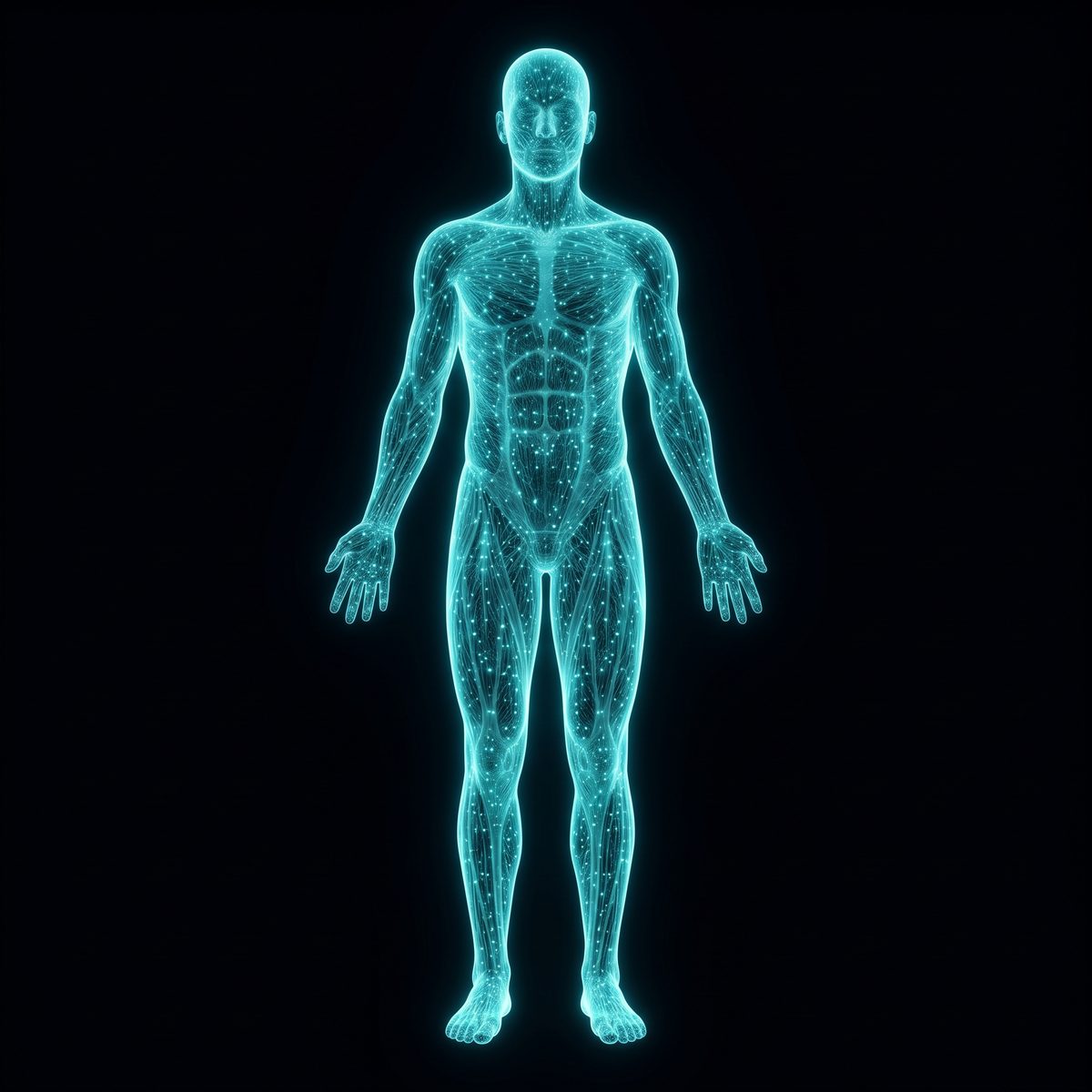
Full-body map of the fascial network
The lower back
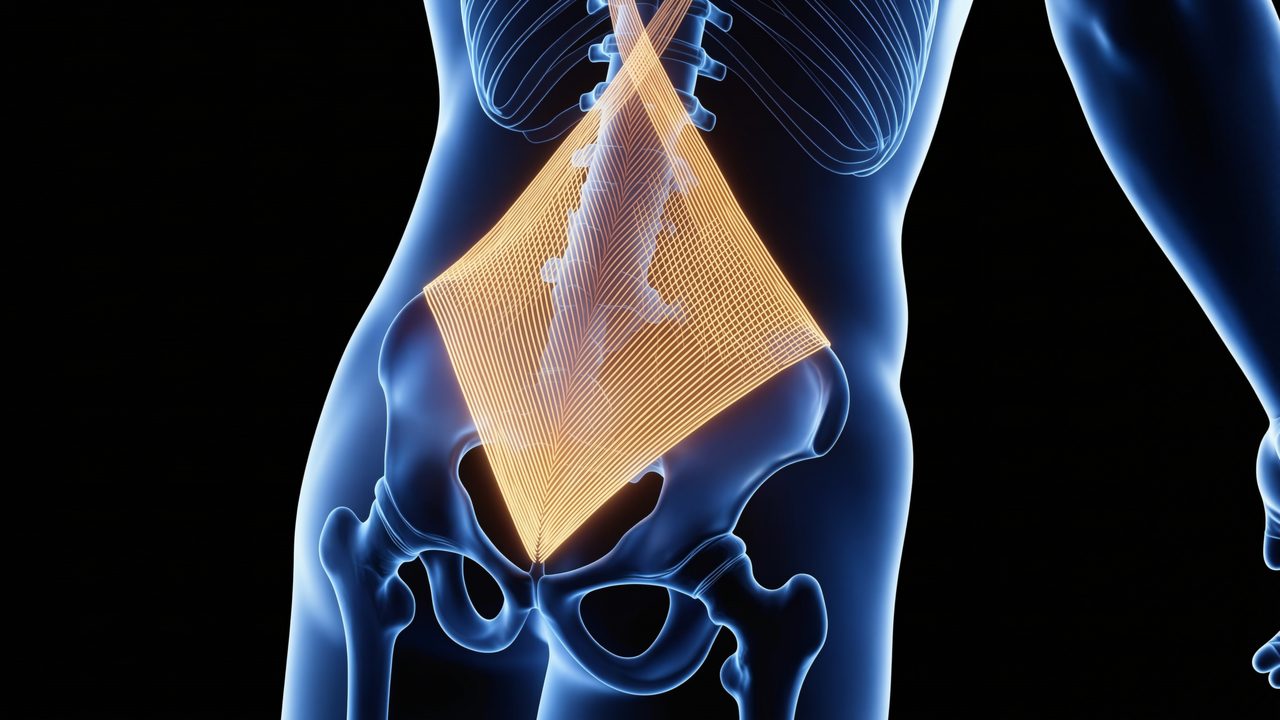
Render of the thoracolumbar fascia across the lower back, lit

The lower back

The patient says

"Years of it. Physio, chiro, osteo. Nothing held."

Trained hands find

A thoracolumbar layer that will not glide, and hips doing the spine's job. Legs and IT bands first, then the back.

What the research shows

The connective tissue over the lumbar muscles is about 25% thicker and glides about 20% less in chronic low back pain (Langevin 2009, 2011). Myofascial release improved pain and function across eight trials (Wu 2021).

Reply

Tell Victor about your clinic.

Thirty seconds, straight to Victor. No patient names.

Reply

Tell Victor about your clinic.

Sent through a form service to Peak Performance Wellness. Nothing else is collected; please leave patient names out. If the form fails, email victor@ppwellness.co.

Start here

The problem: the cases come back.

Most clinics are good at the acute case. The one that fills the diary is the patient who has already seen three professions, improves for a week, and returns. The numbers behind that pattern, from the sources named under each chart.

Low back pain, people living with it
619 million 843 million 2020 2050, projected
Global Burden of Disease 2021, low back pain. The rise is population growth and ageing; the rate per person fell by about a tenth. Lancet Rheumatology 2023. The WHO counts about 1.71 billion people with some musculoskeletal condition (fact sheet, 14 July 2022).
Back within a year

33% of people who had recovered

The one inception cohort in a 2017 systematic review of eight studies. The review's own verdict: the evidence on recurrence is thin, and a history of earlier episodes was the only consistent predictor. da Silva et al., J Orthop Sports Phys Ther 2017.

That is the clinic's reality in one line: the patient who has been before is the one most likely to come again. The question is what the hands do differently the second time.

What this page does not claim. No single method ends recurrence, and the recurrence evidence itself is thin. The claim here is narrower: a team that can read the fascial layers finds things a standard routine misses, and treats them in an order that does not make them worse.
Evidence

The science, with its sources.

Fascia is the connective tissue around and between every muscle, nerve and organ. Three things about it matter to a clinic: it feels, it changes in chronic pain, and the hands can change it back. Each line below carries its study.

It feels

The tissue is wired for pain.

The thoracolumbar fascia is densely innervated. Its outer layer holds free nerve endings of the kind presumed to carry pain, which is why a back can hurt with nothing wrong on the scan.

Tesarz, Hoheisel, Wiedenhöfer, Mense. Neuroscience 2011. Fascia carries more sensory endings than the muscle beneath it: Fede, Stecco et al., Int J Mol Sci 2022.

It changes
No back pain 70% Chronic low back pain 56%
How far the fascial layers slide over each other during passive bending: about a fifth less in 71 people with chronic low back pain than in 50 without. The same group found the tissue over the lumbar muscles about 25% thicker in chronic or recurrent pain. Langevin et al., 2011 and 2009.
The hands change it

Myofascial release, eight trials.

In chronic low back pain, myofascial release improved pain and physical function across eight randomised trials of 375 people. It did not change quality of life, balance, pressure threshold, trunk mobility or mood, and the trials were small and of low quality.

Wu et al., Frontiers in Medicine 2021. Between the layers, hyaluronan lets tissue slide; when it thickens, the layers stick: Fede, Stecco et al., J Anat 2018; Pratt, Int J Mol Sci 2021. Collagen turnover rises with movement and falls with rest: Kjaer, Physiological Reviews 2004.

A field that is growing
307 1,482 2000 2005 2010 2015 2020 2025
Papers on PubMed with "fascia" in the title or abstract, by year of publication. Counted on 9 November 2026. Nearly five times more a year than in 2000.
Burlington, VermontLangevin · ultrasound of fascia in back pain HeidelbergTesarz, Mense · how fascia is wired UlmSchleip · fascia as a sensory organ PaduaStecco · the layers, the hyaluronan between BordeauxGuimberteau · living fascia, filmed Curepipe, Mauritiuswhere it is taught, on the table

Not a map of the world. The groups whose published work the training leans on, and where it is taught. Victor studied their work; he does not claim them as teachers.

Where the honest line sits. The anatomy and the imaging are solid. The treatment trials are small. What is firm: the fascia feels, it changes in chronic pain, and manual release moves pain and function in the short term. What is not yet proven: how long that lasts, and for whom. The training says so to the patient.
  • Tesarz J, Hoheisel U, Wiedenhöfer B, Mense S. Sensory innervation of the thoracolumbar fascia in rats and humans. Neuroscience 2011;194:302–308.
  • Langevin HM et al. Ultrasound evidence of altered lumbar connective tissue structure in human subjects with chronic low back pain. BMC Musculoskelet Disord 2009;10:151.
  • Langevin HM et al. Reduced thoracolumbar fascia shear strain in human chronic low back pain. BMC Musculoskelet Disord 2011;12:203.
  • Wu Z et al. Myofascial release for chronic low back pain: a systematic review and meta-analysis. Frontiers in Medicine 2021;8:697986.
  • PubMed, fascia[Title/Abstract] by year of publication, counted 9 November 2026.
  • Fede C, Stecco C et al., Int J Mol Sci 2022 · Fede C, Stecco C et al., J Anat 2018 · Pratt RL, Int J Mol Sci 2021 · Kjaer M, Physiological Reviews 2004 · Guimberteau JC, Armstrong C, Architecture of Human Living Fascia, 2015.
The training

What your team learns.

Your clinicians already know the anatomy. This adds the read, the release, the order, the frames that protect their own bodies, the hand-back, and the follow-through. Taught on the table, in your rooms, on each other first and then on patients, supervised.

Render of the spine lit along its length
Module

The read

Posture, history, the pattern under the hands. Scan the whole body, find the priority list, decide the order in minutes. Where it hurts is the last place to look.

Victor Cassius Bhatoolaul

“Every patient is different, so there is no routine to memorise. There is a way of scanning the body, finding the priority list, and releasing in the right order. That is what I teach, on the table, until the hands find it on their own.”

Your team leaves with the skill and a Peak Performance Wellness certificate of completion. Not an accredited qualification, not medical training. The method stays ours; the capability stays yours.

Safety

Release what pulls on the pain first.

A sore neck or a sore lower back is often being pulled from somewhere else. Go straight at it and you can make it worse. Two rules that are taught before anything else.

Render of the back of the head and neck: the fascia of the head and the base of the skull lit gold, the neck below dim First Then
Headache, tight neck and shoulders

The head first. Then the neck.

Release the occipitals and the head before touching the neck. Done the other way round, it can bring on headaches and serious injuries.

Render of the hips and thighs: the IT bands down the outside of both thighs lit gold, the lower back above dim Then First
Lower back pain

The legs first. Then the back.

Release the IT bands and the legs before the lower back: quadratus lumborum, psoas. Rub the sore spot first and you can cause serious injuries.

This is not a small thing. Get the order wrong and the patient pays for it, then the clinic does. The order is the first thing checked when Victor watches your team work.
Your team

The therapist's body lasts the career.

Deep work done from the shoulder, the neck and the thumbs destroys the therapist. The frames taught here put the body weight through the elbow, the hip and the foot instead. For a clinic that is fewer sick days and fewer good people lost.

Where therapists hurt
Fingers, thumbShoulderWristNeckArm, elbowForearmBack 50%32%29%26%24%21%19%
Of 161 full-time massage practitioners, 71% reported at least one work-related musculoskeletal complaint in twelve months. Jang et al., J Occup Rehabil 2006. In 502 Canadian massage therapists the wrist and thumb were reported most, then the low back, neck and shoulders. Albert et al., J Bodyw Mov Ther 2008.
What the frames change

Depth from the frame, not the thumb.

Hand on the hip, elbow on the hip, the foot applying the pressure: the weight travels through the skeleton instead of the rotator cuff and the neck. The patient gets a steadier, deeper release; the therapist gets a body that still works at fifty.

Victor's catalogue runs to about fifty frames: for shorter therapists, for tall, large or small patients, for getting into the fascia properly rather than skating over it. The right frame for the body on the table is part of the read.

Maintenance

The stretches a therapist does between patients, releasing the palm's own fascia, the tools that take over from the thumbs.

Position

How to stand and move at the table so the lower back never carries the work. Dynamic, never braced.

Mindset

Not tired, not bored, always improving. Tuning into one's own fascia to read the patient's. It is taught because it can be.

  • Jang Y, Chi CF, Tsauo JY, Wang JD. Prevalence and risk factors of work-related musculoskeletal disorders in massage practitioners. J Occup Rehabil 2006.
  • Albert WJ, Currie-Jackson N, Duncan CA. A survey of musculoskeletal injuries amongst Canadian massage therapists. J Bodyw Mov Ther 2008;12:86–93.
Google

In their words, not mine.

5.0★★★★★Google · 52 reviews · read 27 October 2026

I injured my back in 2010 and spent the next 12 years going to physiotherapy, chiropractors, osteopaths... nothing worked. Victor was the first person to correctly diagnose the issue and his treatments completely changed my life. I highly recommend him.

★★★★★
Rory De Fleuriot · Google review

I first meet such a specialist. The masseur to which the body itself indicates a problem who does not need to explain anything. In a few minutes, all problem areas and trigger points were found.

★★★★★
Ольга Пономарева · Google review

Victor's approach to massage is unlike any I've experienced before. He combines his extensive knowledge of anatomy with a scientific understanding of how the body works to deliver a truly therapeutic massage. It's not just about relaxation; it's about restoring balance and promoting healing.

★★★★★
Carl N · Google review

I have had tensions in my hamstrings for months and went to many therapist for release but no one knew what they were doing until I met Victor. I had my first session a few minutes ago and I can feel the difference right away.

★★★★★
Naajiyah Auladin · Google review

Mauritius National Wrestling Team here. If you're into sports, this type of massage is perfect for you!

★★★★★
multiplyngrind · Google review

The best massage I've ever had. Since I'm a professional freediver, my legs often get sore and Victor very carefully relaxed my muscles. He really understands how the body works and how to work with muscles.

★★★★★
Svetlana Obysova · Google review

Verbatim from Google, spelling and all. More on the testimonials page →

Who teaches it

Victor Cassius Bhatoolaul

Victor Cassius Bhatoolaul

Why I would rather teach it than keep it.

I grew up inside this work, in a house with anatomy charts on every wall, and I have spent over thirteen years on the table since, mostly with people who had already tried everything else. My clinic is close to full. I would rather your team had the skill than send every hard case across the island.

I am not going to tell you I am the best at this. Bring me a case, keep your clinician in the room, and let them tell you.

Victor Cassius Bhatoolaul BSc (Hons) Sports Studies, University of Hertfordshire · 13 years deep fascia practice · second-generation manual therapist · Curepipe, Mauritius victor@ppwellness.co · About Victor →

How I came to this

Six pictures, from the start to now.

A treatment table in a family home, anatomy charts on every wall
The house

Anatomy on every wall.

My mother was a therapist: sports injury, shiatsu, reflexology, sports massage and more. My uncle too, and he healed a lot of people. I was her case study and her co-pilot from very young.

A sports-science biomechanics laboratory
The science

Why the body does what it does.

Sports Studies at the University of Hertfordshire. Biomechanics, how the body adapts to training, anatomy level by level.

Hands working into the muscle and fascia of a shoulder
The hands

Four schools of touch.

Then the hands: international massage, comprehensive sports massage, Swedish and shiatsu.

Render of two fascial layers gliding over each other
Fascia

The layer that joined it all up.

I studied fascia intensely. A course on movement and fascial intelligence connected me with my own body and put everything together.

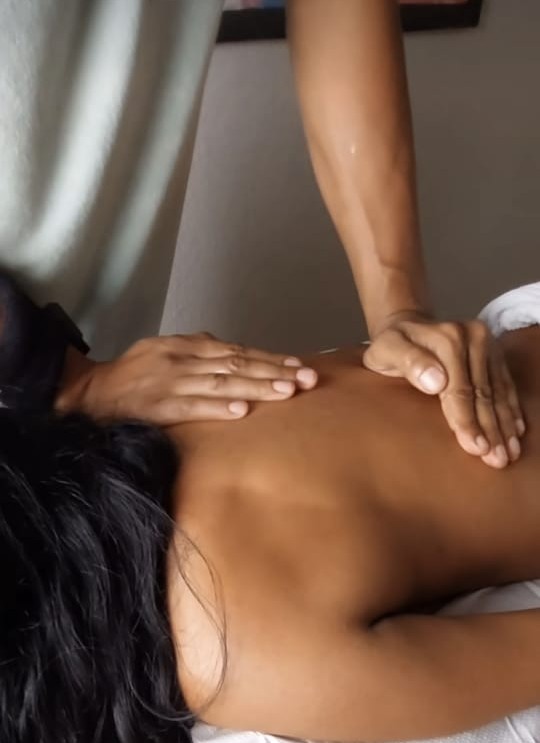
Victor's hands on a client's back
The table

Thirteen years, and counting.

Professionally, on clients, for over thirteen years. Still learning, still expanding. I always ask why.

A therapist's desk at night with case files and notes
The files

Research, and my own clients.

I binge on research, scientific and from the field, and I keep files on every client. From those came my routines, protocols and methods.

← swipe or scroll →

Free

The first case, at your clinic.

Victor Cassius Bhatoolaul treating a client's back on the table Clinic session · Mauritius

Bring Victor one of your hard cases.

He comes to your clinic on a Wednesday, treats the case with your clinician in the room, and talks through what the hands found and why that order. You judge. If it is a yes, the training is agreed in writing.

Pick a Wednesday. Name the case and the clinician who will watch.
A short intake rules out the usual contraindications.
The treatment, at your clinic. A room and a table are all it needs.
You decide. A yes is agreed in writing, no surprises.
Who should not be treated
Anyone in the first trimester of pregnancy, under six weeks after surgery, with a fever or infection, an unstable heart condition, deep vein thrombosis, active cancer treatment without an oncologist's approval, severe osteoporosis, or open wounds in the area. Deep work is intense, not painful: the patient can always breathe through it. Your clinician's judgement on the case comes first.

Plain terms, agreed after the first case.

No price on this page

Days and format follow your team size. Agreed in writing after the first case.

Non-exclusive

We work with other clinics during and after. You can stop at any agreed point.

The method stays ours

Materials and method remain Peak Performance Wellness property. The skill goes to your team.

Wellness, not medical

Private practice, not a medical provider. Diagnosis and medical decisions stay with your clinicians; the training adds a manual skill and a way of reading tissue.